
How Accurate Is 3D Rhinoplasty Simulation? What the Research Says
What published studies say about the accuracy of 3D rhinoplasty simulation, why it varies, and what surgeons should ask any software vendor to show.
Read GuideKratos 3D is a 3D facial scanning and surgical planning platform for rhinoplasty, jaw, and facial surgery. These guides cover how the technology works, how it compares to traditional hardware scanners, and how surgeons use it in practice.
What published studies say about the accuracy of 3D rhinoplasty simulation, why it varies, and what surgeons should ask any software vendor to show.
Read Guide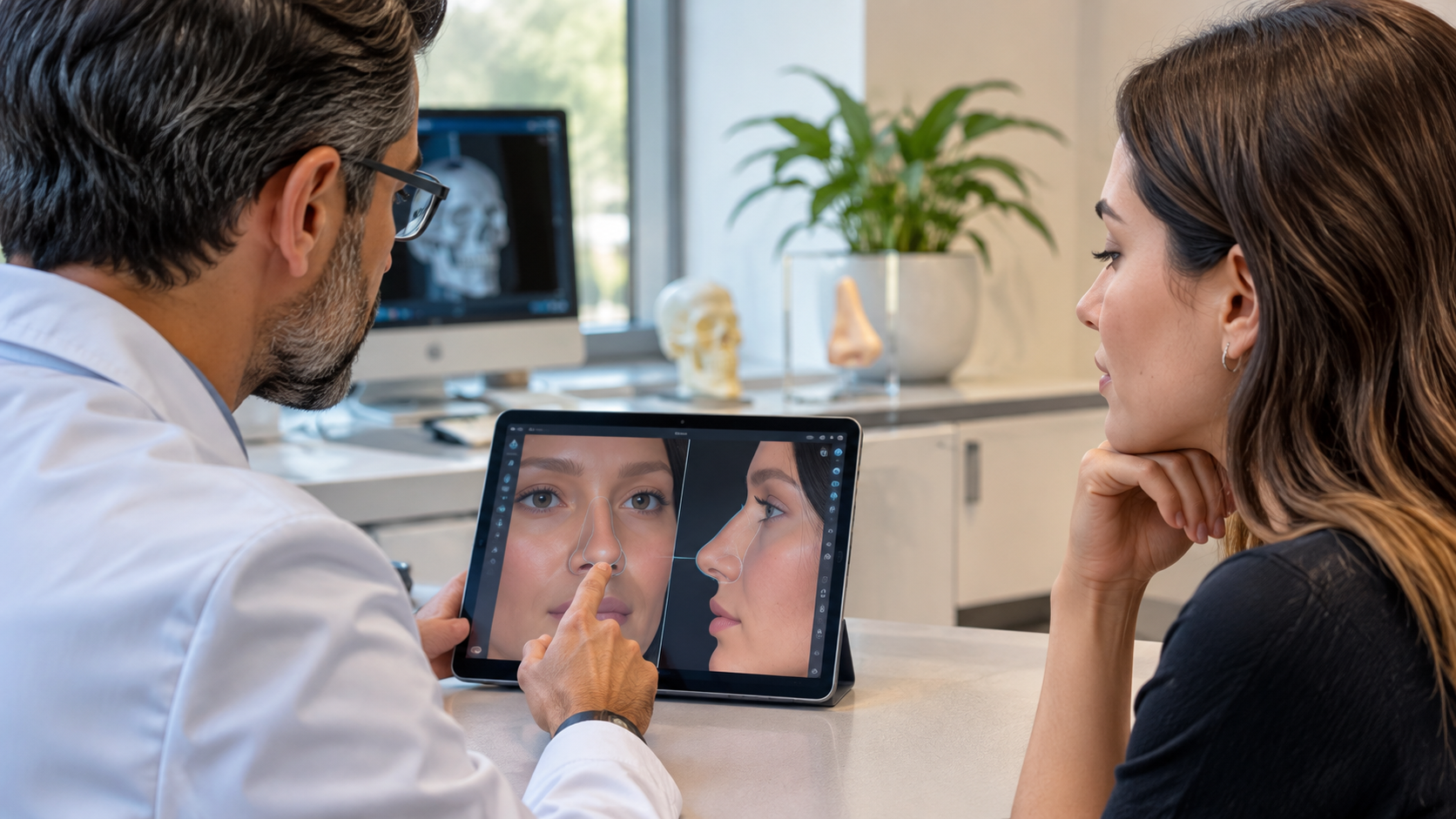
How surgeons can use a 3D rhinoplasty simulation to set realistic expectations: what to show, what to say, and what not to promise.
Read Guide
A Crisalix alternative for rhinoplasty and facial surgery planning: how a desktop 3D planning tool with smartphone scanning differs from a web-based simulator, and what to compare before switching.
Read Guide
How rhinoplasty simulation software turns a 3D facial scan into a surgical plan, which measurements it produces, and what a simulation can and cannot promise a patient.
Read Guide
What 3D facial analysis software does for facial plastic surgeons: landmark detection, angle and distance measurements, symmetry checks and how to fit it into a consultation workflow.
Read Guide
A practical, step-by-step framework for planning revision rhinoplasty cases with 3D simulation, from cartilage assessment to patient communication.
Read Guide
Smartphone-based 3D facial scanning explained: how it compares to hardware scanners like Vectra H2 and Artec on cost, accuracy, and clinic workflow.
Read Guide
What to look for in 3D rhinoplasty planning software: accuracy, hardware requirements, workflow, and how Kratos 3D compares to Vectra and Crisalix.
Read Guide